Skip to content
BaidoaThe Price of Political Power

The story

What happened in Baidoa?

This section sets out what this documentation can describe about the crisis in Baidoa and South West Somalia during 2026. Each part distinguishes what is established from what is reported, alleged, disputed or unresolved. Where the available evidence does not settle a question, this publication says so rather than filling the gap.

A political dispute became a security crisis. The people who paid for it were not the people competing for office.

A contested political process

At the centre of the crisis is a dispute over political authority in South West Somalia and over the terms by which that authority is claimed, extended or transferred.

Competing sides have advanced competing accounts of legitimacy. Each account is presented by its own supporters as lawful, and by its opponents as unlawful. This documentation does not adjudicate which claim is legally correct; it records that the dispute exists, that it is unresolved in public, and that it has had consequences beyond politics.

  • Evidence status: Verified fact

    A public political dispute over authority in South West Somalia was active during 2026.

  • Evidence status: Disputed

    Which political authority is legitimate. Competing accounts exist and are advanced by interested parties.
The actors named in public debate

Public debate around the crisis has repeatedly referenced the federal leadership under President Hassan Sheikh Mohamud, the South West administration associated with Abdiaziz Hassan Mohamed Laftagareen, and figures aligned with Adan Madobe, alongside Jubaland-aligned officials and other regional actors.

Naming an actor in public debate is not the same as establishing that the actor ordered, authorised or carried out a specific act. This publication names actors only as participants in a public dispute, and separately identifies which specific actions the available evidence establishes.

  • Evidence status: Multiple-source reporting

    These figures and administrations are widely referenced by multiple sources as parties to the political dispute.

  • Evidence status: Unknown / unverified

    Individual command responsibility for specific incidents. No documentary evidence supplied to this project establishes specific orders.

When political competition acquires weapons

The most consequential feature of this crisis is the movement of political competition out of negotiation and into the space where armed forces operate.

When armed formations become instruments of political positioning, the ordinary safeguards that separate civilians from political conflict weaken. Roads close. Markets empty. Neighbourhoods become terrain. Young men in uniform are placed in positions where they may be asked to use force in a dispute that is not theirs.

This is a structural observation supported by the pattern of events recorded in the timeline. It is not an assertion that any named individual issued a specific military order.

  • Evidence status: Multiple-source reporting

    Armed confrontation accompanied political disagreement on more than one occasion during 2026.

  • Evidence status: Political claim / allegation

    Each side has accused the other of deliberately militarising the dispute. These are claims by interested parties.

The confrontations

This documentation records four confrontation dates in 2026 — 30 March, 30 May, 17–18 August and 3 September — together with a separate reported incident in Doolow, Gedo, on 4 September.

The timeline sets out each date individually, with what is established, reported, alleged and still unknown kept apart. Read together, they describe a crisis that recurred rather than resolved.

The civilian consequence

Armed confrontation inside or near a populated city does not remain confined to the people who carry weapons. It reaches households, schools, clinics, markets and transport.

This publication does not publish casualty figures it cannot verify. Inventing numbers would damage the very people this project exists to serve. What it records instead is the category of harm: displacement, interruption of livelihoods, interruption of education, fear, bereavement, and the slow erosion of civilian governance.

  • Evidence status: Verified fact

    Armed confrontation in populated areas exposes civilians to risk and disruption.

  • Evidence status: Unknown / unverified

    Verified casualty totals. This project has not been supplied with independently verified figures and does not estimate them.

What this documentation does not claim

This publication does not claim to know who fired first in each confrontation, who authorised each deployment, or what private calculations preceded each decision.

It does not describe any conduct as a war crime or a crime against humanity, because such conclusions require legal determination by a competent body on evidence this project does not hold.

It does not attribute responsibility on the basis of political benefit. The fact that an outcome advantages a party is not evidence that the party caused it.

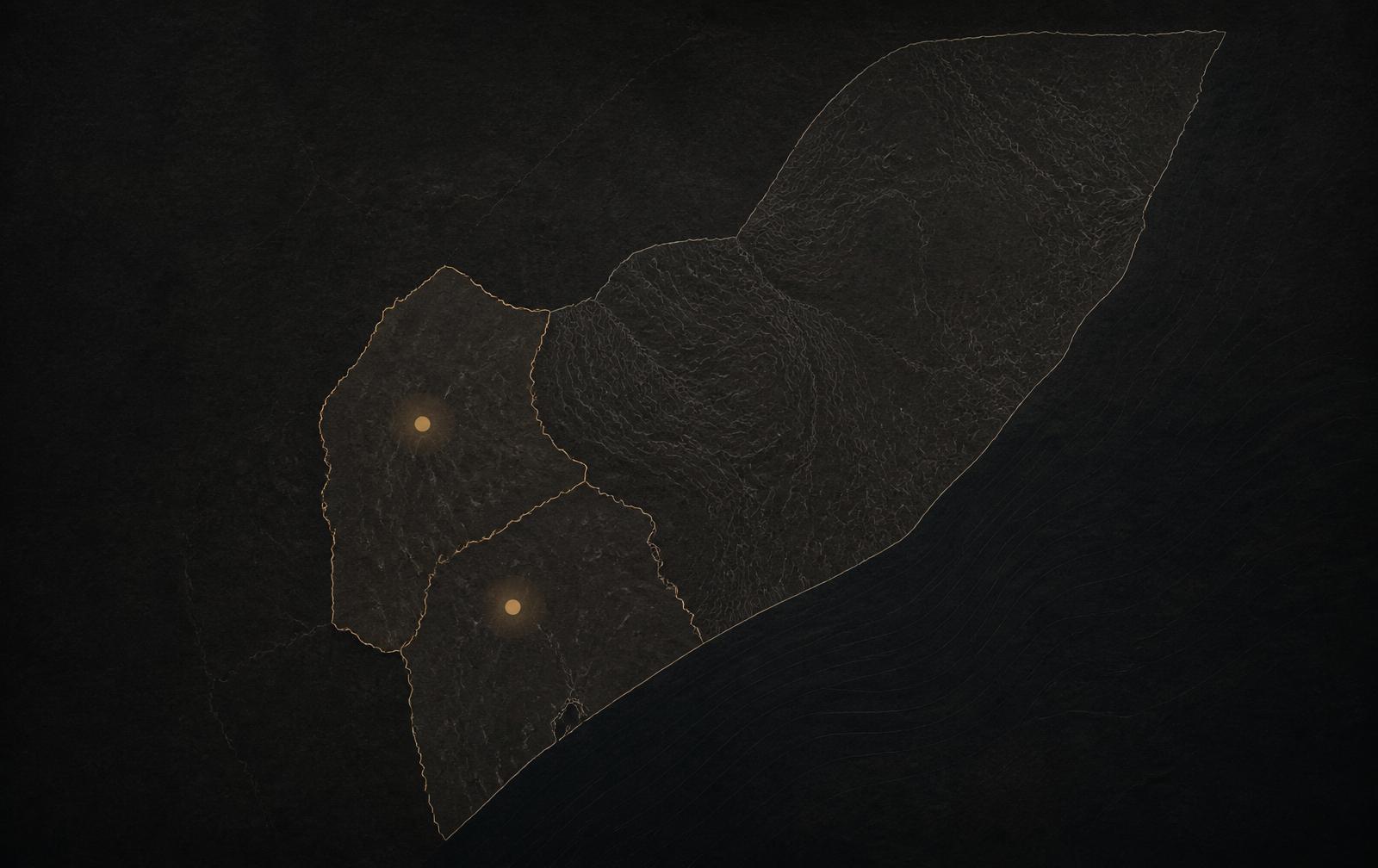
Minimal topographic illustration of the Somali regions referenced in this documentation, with two location markers.
Arts by Mahad Creates

Chronology

The crisis — 2026

Select any date to open the record for that day. Established facts, reported accounts, allegations and unresolved questions are kept separate and are not merged.

  1. Evidence status: Verified fact

    What is established

    • A major confrontation took place on this date.
    Evidence status: Multiple-source reporting

    What was reported

    • Multiple accounts circulated describing armed exchanges and disruption to normal movement in the affected area.
    Evidence status: Political claim / allegation

    What was alleged

    • Each side publicly attributed responsibility for initiating the confrontation to the other.
    Evidence status: Unknown / unverified

    What remains unknown

    • Which party initiated the exchange.
    • The chain of command and any orders given.
    • Verified casualty figures, civilian or military.